


common-start
time tagger, TDC, triggered measurements, common-stop
In time-to-digital converter (TDC) and time-interval analysis terminology, a common-start architecture refers to a measurement paradigm where time intervals are recorded strictly relative to a singular, shared trigger signal. This "start" event defines the absolute zero-point ($t_0$) for a subsequent time window (gate), within which one or multiple "stop" events on individual input channels are detected and measured.
Working Principle and Multihit Capability In typical experimental setups (such as laser excitations or pulsed particle beams), the initial trigger pulse is routed to the TDC's dedicated Start channel. The arrival times of subsequent signals—generated by sensors like single-photon avalanche diodes (SPADs) or microchannel plates (MCPs)—are recorded as relative time differences ($\Delta t = t_{stop} - t_{start}$). Advanced common-start TDCs feature exceptional multihit capability, meaning they can register thousands of independent stop events across multiple channels following a single start trigger, limited only by the device's double-pulse resolution (dead time) and internal FIFO buffers.
Advantages: Data Efficiency and Throughput Unlike continuous absolute time-tagging, where every event is streamed with an absolute 64-bit timestamp, a common-start architecture groups relevant stop events relative to their start directly in the hardware. This drastically reduces the PCIe data bandwidth required for transfer to the host PC and heavily reduces CPU load. Researchers obtain pre-correlated data packets ready for immediate histogramming, which is essential for high-throughput applications with high repetition rates.
Key Applications Common-start configurations are the standard choice for time-of-flight (TOF) experiments where an initial excitation event predictably causes a cascade of delayed responses.
Prominent applications include:
- Time-of-Flight Mass Spectrometry (TOF-MS)
- Time-Correlated Single Photon Counting (TCSPC)
- Fluorescence Lifetime Imaging Microscopy (FLIM)
- LIDAR and Laser Ranging
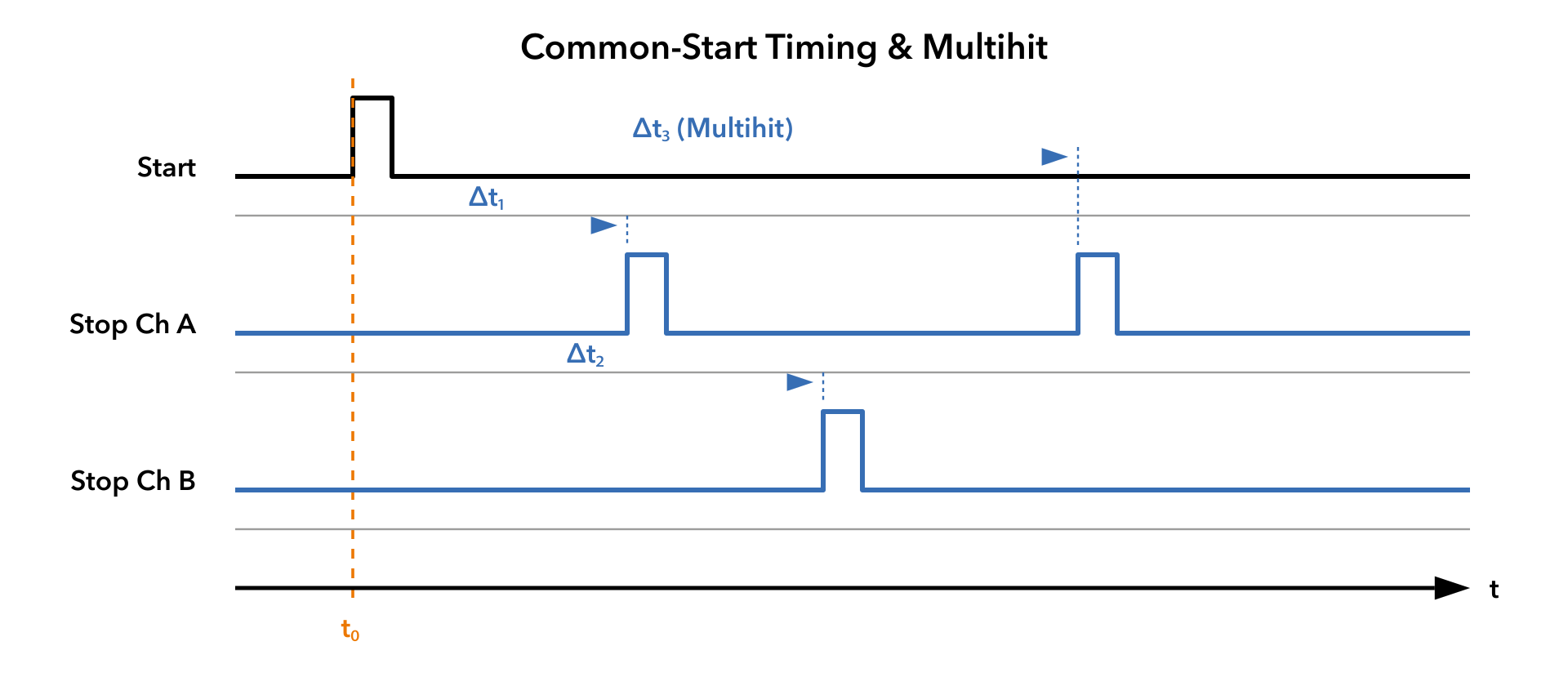
Figure 1: In a common-start setup, all incoming stop signals (multihits) are measured as relative time differences (Δt) to a shared start trigger (t₀).
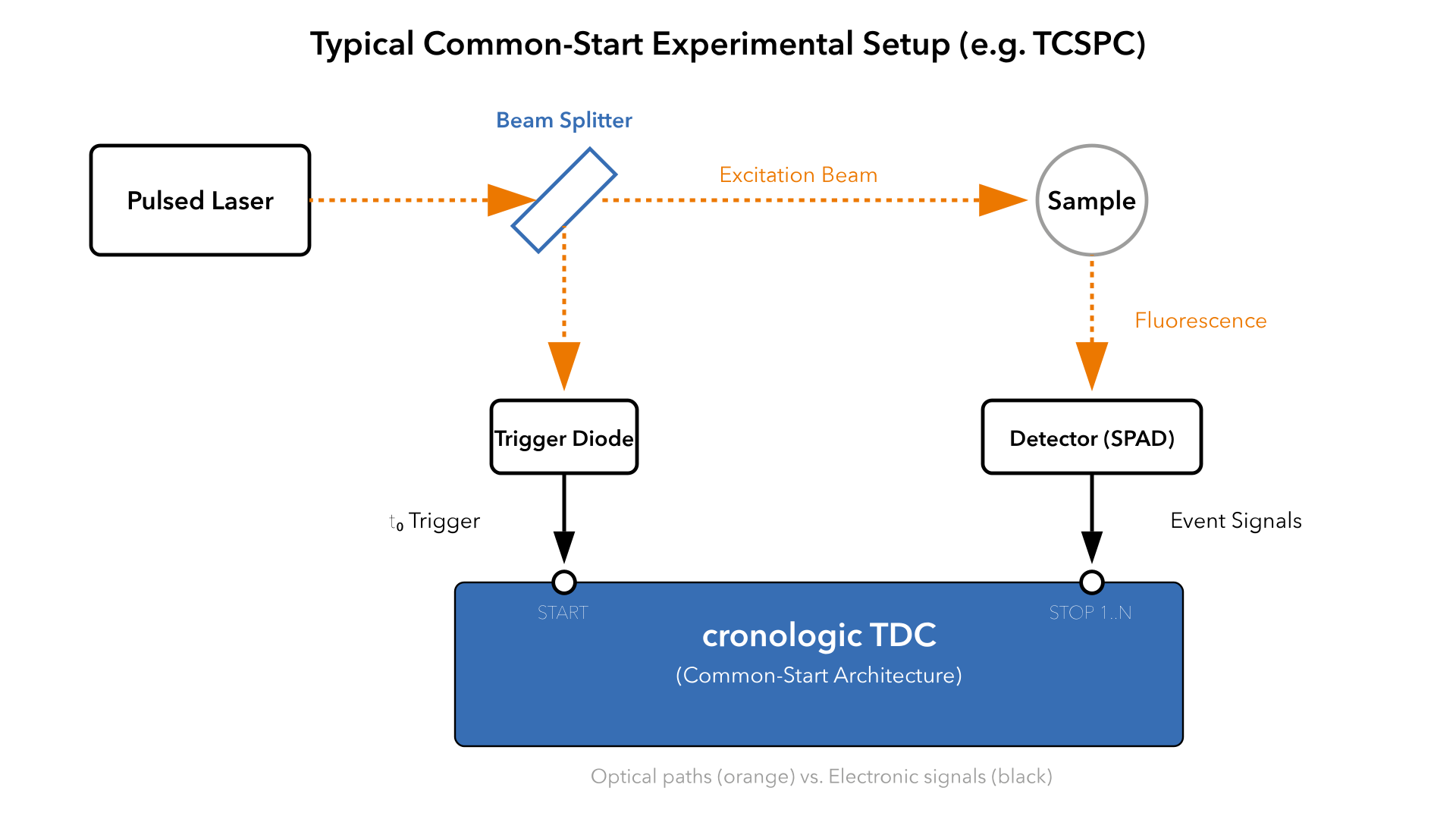
Figure 2: Typical TCSPC setup. A beam splitter generates the initial start trigger, while the delayed fluorescence signal from the sample acts as the stop event.